An Interview with Marcel Duchamp
Right before his death, The Fed had the pleasure of interviewing the avant-garde artist Marcel Duchamp. His work focused on experimental, nonconformist ideas that manifested in all kinds of ways. Moments from the interview are especially prevalent in today’s political climate, on Columbia’s campus and off. His work is on view at the Museum of Modern Art through May.
The Fed: Thank you so much for being here today, Marcel.
Marcel Duchamp: Of course. Anytime.
TF: You’ve spent much of your career focusing on pushing the grain in the art world, and finding new ways to produce what can be considered art. What do you think when people call you an art revolutionary?
MD: It’s a great compliment, one that I’m very grateful to accept. I find that art is less powerful, less concrete than the ideas and ethos of the artist himself.
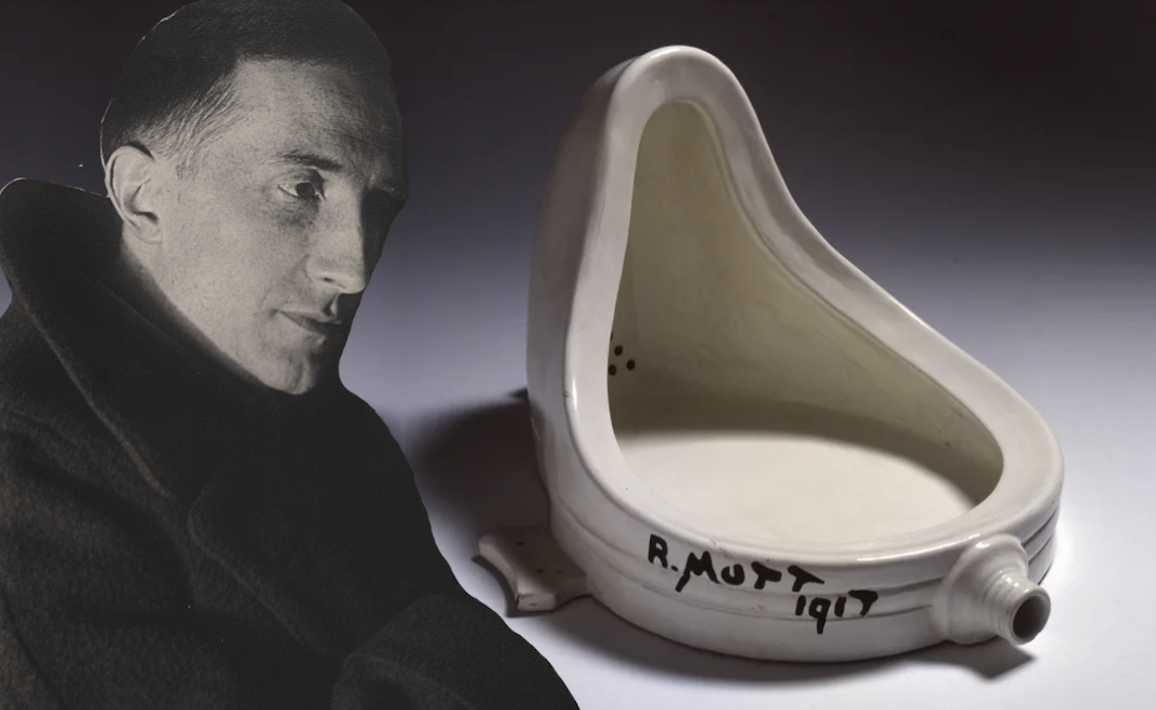
TF: Maybe your most famous piece is your 1917 sculpture La Fontaine. Can you talk a little bit about the intent of the piece?
MD: I created that piece with, as you mentioned earlier, the hope of redefining what art is and can be. The work resembles a toilet—a holding place for the remnants of literal human waste. It’s also a comedic piece and a commentary on the art world.
TF: If you were to do the piece over again, would you change anything about it?
MD: As much as I love the piece, I really feel it’s missing a performance element. The intention of the piece is to disturb, to disgust a certain audience, and to generate conversation. Now that the piece has been revealed to be made by me, I don’t really feel that it has the same effect all these years later.
TF: What do you mean by performance element?
MD: I think that something that interests me is the idea of anonymous performance art. I was easily able to hide behind this sculpture by signing a fake name, but I’m looking instead to leave behind a true, living piece of myself without anyone knowing who I am.
TF: What would this entail?
MD: I mean, you guys are students! Think big here! Someone should shit on the floor of a dormitory bathroom. What a show. To hide oneself yet to live so openly. It is exactly what I wanted to do with La Fontaine, but the piece’s reputation is more permanent, more anonymous.
TF: Is this something you plan to do?
MD: No, I’m too famous. It needs to be truly anonymous. Art for the sake of itself, an artist whose chef-d’œuvre is unknown to many but known in spirit to himself.
TF: Isn’t this, plainly, gross?
MD: That’s what they said about La Fontaine. You Americans are so close-minded. Art isn’t supposed to be comfortable. One day you’ll see.
Duchamp stormed out of the interview and never returned to Columbia’s campus again. The interview was never published because of its incomplete nature, but its themes ring particularly powerfully, even all these years later.